


mewe: The Safe Network
4.140.61K Reviews
App Specs
- Version
- 9.0.23.0
- Updated On
- License
- Free
- Downloads
- 10,000,000+
- Developer
- MeWe
- Categories
- Social
- Platform
- Android
Screenshots

 Analysis by AppCompare
I approached MeWe as a practical alternative to the noisier social networks I use every day. Its focus is social communication built around privacy, photos, messages, groups, and friends, rather than an endless public feed designed to keep me scrolling. That difference is noticeable from the start: the app feels more useful when I already have people or communities in mind, and less compelling if I expect a huge stream of public entertainment.
Developed by MeWe, this free social app has grown into a sizeable service, with over ten million installs and an average rating of 4.1 from around 187 thousand ratings. Those figures suggest a product that has found a real audience, although they do not remove the need to decide whether its style matches your habits. The current version is 9.0.23.0, it is intended for mature users aged 17 and up, and optional purchases range from under a dollar to several hundred dollars per item.
How MeWe feels in everyday use
I find MeWe most useful when I decide what a conversation is for before I open the app: a family update, a shared photo, or a discussion with a particular group. That small choice can make a social network feel less like another attention stream and more like a place I visit with a reason. It also sets up the next question: whether its separate spaces make it easier to follow conversations without adding more digital clutter.
A calmer starting point than mainstream social feeds
My first impression is that MeWe makes more sense when I treat it as a collection of private circles instead of a replacement for every part of a conventional social network. I can imagine using it with family, a hobby group, former classmates, or a small community where the point is conversation rather than public performance. The privacy-first identity gives the app a clear purpose, and that purpose is more distinctive than simply offering another place to post status updates.
The important trade-off is that a privacy-focused network depends heavily on the people I bring into it. If my friends and relatives are already active there, the experience can feel focused and comfortable. If they remain on larger alternatives, MeWe may feel quiet no matter how well the app itself works. I would not install it expecting the network alone to supply an instant audience.
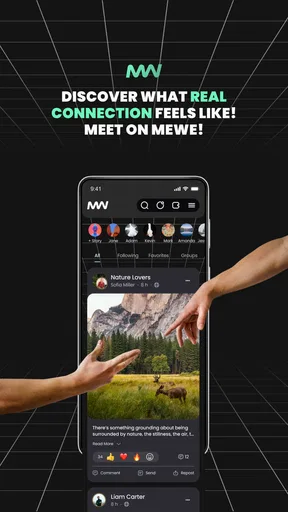
For personal communication, I find the combination of group spaces, direct messages, and photo sharing more useful than a single mixed feed. A family can keep one conversation separate from a local club, while a friend group can share images without placing them beside unrelated public posts. That separation is a small but meaningful improvement for anyone who dislikes having work contacts, relatives, and casual interests collide in one timeline.
What speed feels like during ordinary browsing
In normal use, I judge a social app less by one dramatic launch and more by how quickly it lets me move between conversations, groups, and media. MeWe is at its best when I keep my activity focused: opening a message thread, checking a group, or responding to a photo. That kind of short session suits the app’s structure and makes it feel more purposeful than a feed built around constant discovery.
Worth Reading Before You Choose

EA SPORTS FC Mobile 26 Is a Bigger Football Game, but It Takes Time

Flipboard Shows What News Apps Must Do Beyond the Feed

Switching to Android Auto Means Rethinking Your Driving Routine

Google Calendar Makes a Crowded Week Easier to Manage

Ludo King Makes the Most of the Minutes Between Plans

Baby Panda World Brings Quick Play to Modern Phones, but Its Game Library Feels Busy
Media-heavy activity naturally changes the experience. Opening several photos, moving through busy group conversations, or switching repeatedly between different areas asks more from the phone and connection than reading a short message. I would avoid judging the app solely on the first screen, because social applications often feel quick with text and less immediate when images and active discussions are involved.
A useful habit is to organize my participation before posting. I would choose the correct group, check whether the conversation already contains the answer I need, and then share only what belongs there. This is not just good etiquette; it also reduces unnecessary back-and-forth and makes MeWe feel faster because I spend less time searching through badly organized conversations.
When heavier use exposes friction
The more demanding scenario is not a single long message but a busy combination of group activity and media sharing. A group that receives many photos can become harder to scan than a quiet discussion. Likewise, using several circles for different parts of life requires attention to where each post belongs. The app’s privacy-oriented structure is valuable, but it also means I have to manage those boundaries instead of relying on one universal audience.
This is where I see the main practical weakness: privacy and organization can create extra decisions. Before posting, I need to think about the intended group, the people who should receive it, and whether a direct message would be more appropriate. Users who prefer the effortless reach of a large public network may find that process slower, even if it is safer and more deliberate.
My advice for heavy users is to keep groups purposeful. A family group, a project group, and an interest group should have different roles. If I use one space for everything, the advantage of separated communities quickly fades. MeWe rewards a little housekeeping, while a mainstream network may feel easier when I simply want to publish once and let the platform distribute the post broadly.
Reliability and recovering from interruptions
Reliability matters especially in messaging because people assume a conversation will remain understandable when they return later. MeWe is most convincing when I use it as a stable home for ongoing circles rather than as a high-speed broadcast tool. Keeping discussions in their intended spaces gives me a better chance of finding the relevant context after stepping away.
When an interruption happens, I would recover by reopening the specific group or message thread instead of trying to reconstruct events from a general feed. That workflow is one of the app’s practical strengths: the social experience is divided into recognizable places. It also explains why a new user should spend time learning the layout rather than judging it after a few minutes.
I would still keep important information in a separate place. No social app should be my only archive for family plans, work details, or irreplaceable photographs. MeWe can be a convenient place to discuss and share, but I would not treat a social conversation as a guaranteed backup. Saving important files independently is sensible, particularly when a group contains media that matters beyond the conversation itself.
Resource demands and older devices
MeWe supports devices running Android 9 or later, which gives it a defined compatibility boundary. For someone using an older phone, the operating system requirement is the first practical check before expecting the app to install. On a supported device, the experience will still depend on available storage, memory, connection quality, and how much media the user handles.
Text-focused sessions should be easier on a phone than constant photo browsing or participation in several active groups. I would be more cautious on a device that already struggles with switching between apps, has limited free storage, or is frequently short on battery. Social apps are often used in bursts throughout the day, so small delays or repeated reloads become more noticeable than they would in a single-purpose utility.
There is also a difference between app performance and network activity. A message conversation may feel immediate on a strong connection, while a photo exchange can take longer for reasons outside the app itself. I would test MeWe in the places where I actually use it—at home, on mobile data, and in weaker coverage—before deciding whether it fits my routine.
Privacy as a daily workflow, not just a label
The strongest reason to choose MeWe is not that it offers another place to post; it is that privacy is central to how I think about sharing. I can approach each group as a defined audience instead of assuming that one public-facing profile is suitable for every relationship. That is particularly useful for people who want to discuss family matters, local communities, or niche interests without mixing them into a broad public identity.
However, privacy does not mean I can stop thinking about what I share. A private group can still contain many people, and a photo or message can still be copied by someone who sees it. I would therefore use the app with the same basic care I apply anywhere else: avoid posting sensitive information casually, check the audience before sending, and remember that digital sharing is difficult to reverse.
One workflow I like is separating announcements from discussion. I might use a group post for information everyone needs, then move a personal clarification into a direct message. This keeps the main conversation readable and reduces the chance that private details become part of a wider group exchange. It is a simple habit, but it makes the app’s group-based design considerably more useful.
How it compares with familiar alternatives
Compared with the largest mainstream social networks, MeWe feels less centered on public reach, recommendation-driven discovery, and visible popularity. That can be a relief if I am tired of algorithmic feeds or do not want every interaction shaped by engagement. The cost is discoverability: a larger service is usually better when I want to find almost anyone, follow major public accounts, or consume a constant stream of trending material.
Compared with a dedicated messaging app, MeWe offers a broader social setting for groups and shared interests. A simple messenger may be quicker for a small conversation that already has an established contact list, while MeWe is more appealing when I want several communities organized inside one social service. The better choice depends on whether I value a focused private network or the most direct route from one person to another.
Compared with a photo-sharing platform, MeWe is less attractive if my main goal is public visual discovery or building a creator audience. Its value is stronger when photos are part of a relationship or group conversation. I would recommend it to someone who wants controlled sharing, not to a user whose success depends on maximum exposure and rapid public growth.
Who should use it—and who should skip it
I think MeWe suits people who want a quieter social environment, families that need separate circles, and communities that prefer discussion over public broadcasting. It is also a reasonable option for anyone who wants to rethink how much of their social life is exposed to a large, general-purpose network. The app’s identity is clear enough that I would recommend trying it with one real group rather than creating an account without a purpose.
I would skip it if all my contacts are firmly committed to another platform and unwilling to move. I would also look elsewhere if I need a massive public audience, live trend discovery, or a creator-oriented ecosystem. The privacy focus is meaningful, but it cannot solve the social problem of an empty network around me.
Families should think about the mature 17+ content rating before involving younger users. That age guidance makes the app a poor choice for children, even if the intended use is an apparently harmless family conversation. Adults should also discuss group boundaries in advance, especially when several generations or different social circles share the same space.
Costs, version, and the practical decision
The app itself is free to download, which makes testing it with a small circle straightforward. Optional in-app purchases are available, with individual items priced from $0.99 to $399.99. Because the range is wide, I would avoid assuming that every useful part of the experience is included in the same way for every user. Before paying, I would read the purchase screen carefully and decide whether the added value applies to my actual use rather than buying simply because a feature is presented.
The current Android version is 9.0.23.0, and MeWe has been available since October 14, 2014. That long presence gives the service a more established feel than a newly launched social experiment, while the current version shows that it continues to receive product updates. Still, an established app can have a learning curve, and I would give myself time to understand its group structure before forming a final opinion.
My overall verdict is favorable but specific: MeWe is best when privacy, separate communities, and intentional sharing matter more than maximum reach. I would use it for a family circle, a private interest group, or conversations that deserve a clearer boundary than a public feed provides. I would not choose it as my only social platform if I needed constant discovery or a guaranteed audience.
Performance expectations should remain realistic. Short, text-based sessions are the natural fit, while media-heavy groups and frequent switching can feel more demanding on an older or constrained phone. Recovery is helped by the app’s separated conversations, but good organization and independent backups remain important. In the end, the decision is less about replacing every familiar network and more about choosing a calmer, privacy-minded space for the people and groups I actually trust.
Pros
- Strong privacy focus with minimal reliance on targeted advertising.
- Chronological feeds reduce algorithm-driven content filtering.
- Supports private groups
- chats
- and customizable sharing controls.
- Available on both Android and iOS for cross-platform communication.
- Offers a familiar social-network layout that is easy to navigate.
Cons
- The smaller user base can make some communities feel inactive.
- Some advanced features require a paid subscription or in-app purchase.
- Content discovery is less extensive than on larger social platforms.
- Moderation quality may vary between different groups and communities.
- Performance can depend on device and connection
- especially with media-heavy feeds.
FAQs for mewe: The Safe Network
What is MeWe: The Safe Network?
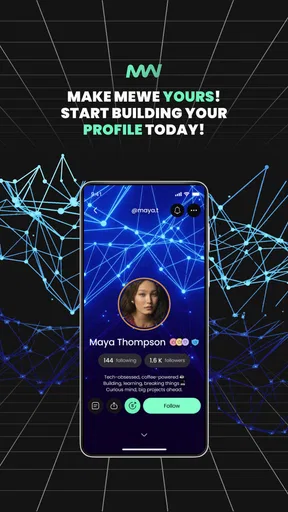
MeWe is a social networking app designed around privacy, user control, and communication without relying heavily on targeted advertising. It lets you create a personal profile, connect with contacts, join groups, share posts, send private messages, and participate in community discussions. The app is available for Android, iOS, and web browsers, making it possible to continue conversations across multiple devices.
Is MeWe really private and safe to use?
MeWe places strong emphasis on privacy and states that it does not sell personal information or use traditional behavior-based advertising. However, no social network can guarantee complete protection from every risk. Your privacy also depends on the information you share, the groups you join, your account settings, and the people you communicate with. Review the privacy options carefully and avoid posting sensitive personal details publicly.
Does MeWe require payment or offer a free version?
MeWe can generally be used with a free account, allowing users to create a profile, communicate, join communities, and share content. Some optional features, storage options, or premium services may require payment depending on the current plan and region. Before subscribing, check the pricing shown inside the app or on the official website, including renewal terms and whether a trial automatically converts into a paid subscription.
What can I do on MeWe besides posting updates?
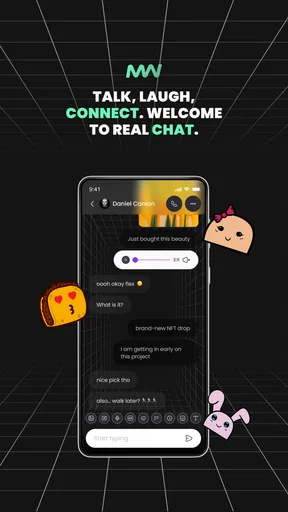
MeWe offers more than a standard news feed. During testing, users can use private and group chats, create or join communities, share photos and videos, publish posts, and organize conversations around specific interests. The experience is particularly suited to people who prefer smaller, topic-focused groups rather than a platform dominated by algorithmic recommendations. Available tools may differ between free and paid accounts.
Is MeWe a good alternative to Facebook or other social networks?
MeWe may be a good alternative for users who prioritize privacy, fewer targeted advertisements, and greater control over their social experience. Its interface and core features are familiar to people coming from Facebook-style platforms, although the size and activity of communities can vary considerably. If your friends or favorite groups are not already on MeWe, the network may feel quieter and less useful at first.


